
Small holes, fast return to use
Polyurethane foam
- Access holes about the size of a dime
- Lightweight expanding foam that adds little load
- Often ready for traffic soon after the job
Best for: Tight access, finished yards, and quick turnarounds
Raise Sunken Driveways, Walks & Patios Fast
Call now for an on-site evaluation and a written estimate from a vetted Birmingham-area concrete leveling contractor.
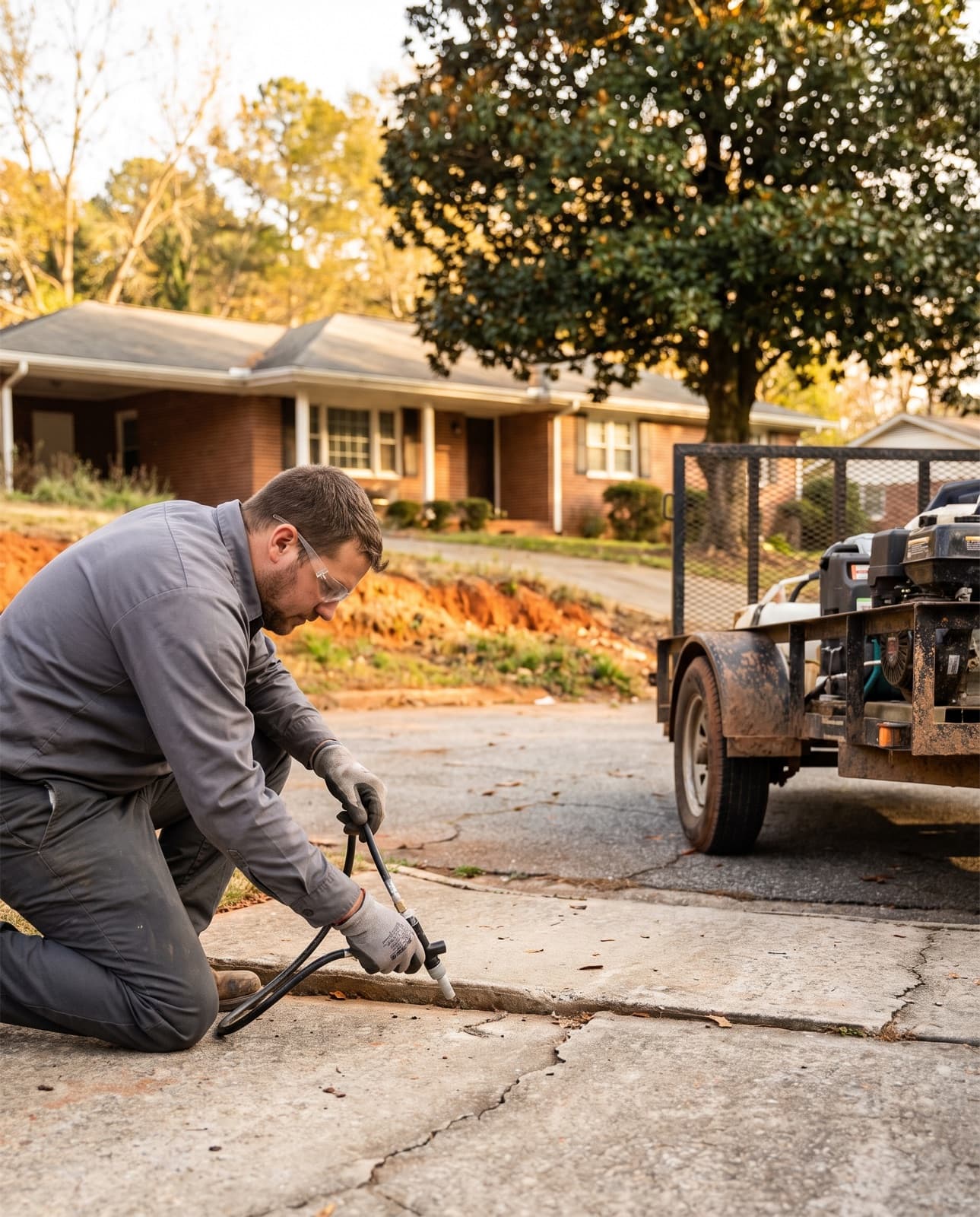
From the first on-site evaluation through foam, mudjacking, and replacement when lifting is not the right call.
A contractor measures how far the slab has dropped, reads the cracking pattern, and checks the soil and drainage before recommending a fix. Every job we coordinate starts here, because a guess from a photo is no substitute for standing on the slab.
Book one: (205) 555-0100Slabs rarely sink because of the concrete. They sink because the ground under them moved.
Call (205) 555-0100A driveway that dips toward the garage, a walk that catches your toe, a patio that has crept away from the house: each one is a sign that the ground beneath the concrete has changed. Birmingham is built on hills, ridges, and valleys of deep red clay, and that clay does a lot of work on a slab. It swells when the spring storms roll through and shrinks in the dry, humid stretches of summer, and every cycle leaves a little less support underneath.
Concrete Leveling Birmingham matches homeowners and property managers across Jefferson and Shelby Counties with vetted, licensed contractors who specialize in raising and stabilizing sunken slabs, from a single trip-hazard panel to an entire driveway. We are not a concrete company. We are a matching service built to get you to the right local contractor quickly.
Steep lots make the problem worse. Rain that runs off a hillside driveway does not politely wander away; it follows the edge of the slab, slips into the seam, and carries fine soil with it. Over a few seasons a hollow forms, and the concrete above it starts to drop or tilt. Those small changes, like a new step in the walk or a puddle that never used to appear, are the earliest clues.
The good news is that the fix often does not mean tearing anything out. Foam injection and mudjacking both raise an existing slab through small holes, which is why an in-person evaluation, and not a guess from a photo, is the right first step before you decide how to repair it.
No faceless national call centers and no random dispatch, only experienced crews who know what red clay and a Southern downpour do to a slab.
Plenty of companies say they do concrete repair. What we screen for is whether a contractor truly understands lifting, not just flatwork or new pours, and whether they will commit to their assessment and their estimate in writing before they drill a single hole. That bar keeps our network smaller, but more dependable.
Every contractor we refer carries general liability insurance and the licensing Alabama and local governments require for concrete work.
The crews we send understand how Birmingham's red clay, steep lots, and pounding thunderstorms combine to undercut slabs.
We help you weigh foam, mudjacking, and replacement for your slab and your budget before you commit to any of them.
You can compare written estimates from several qualified providers instead of hiring whoever answers the phone first.
For terraced lawns and finished landscaping, we lean toward contractors skilled in small-hole lifting that keeps the mess low.
From a Crestwood bungalow to a rental in Bessemer or a small retail lot in Pelham, we find a specialist equipped for it.
Trip hazards and other urgent concrete problems get pushed toward the front of the line for an evaluation.
Getting matched and reading a written estimate never commits you to hiring anyone.
Your contractor will confirm the right fit at the on-site evaluation, but this is the general shape of each option.
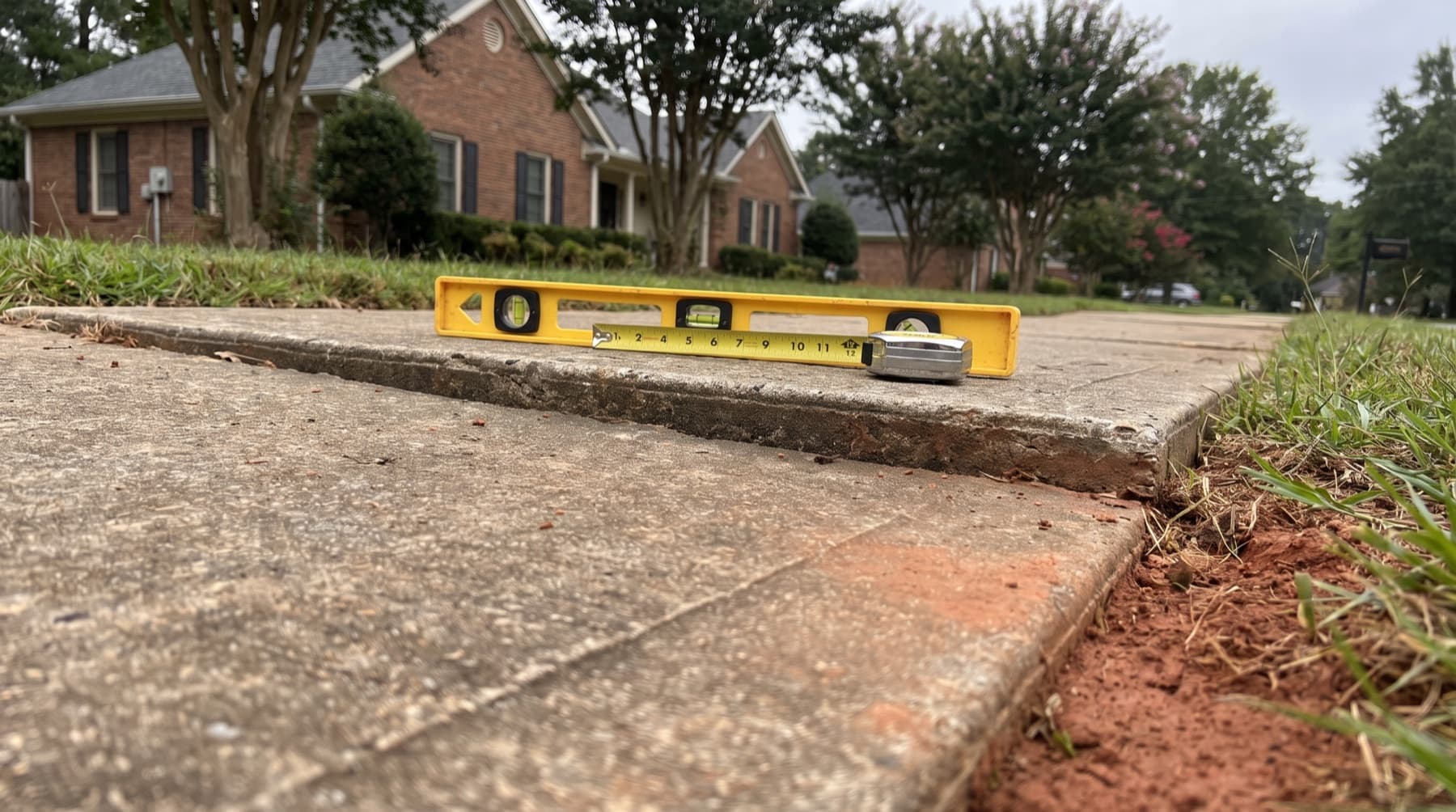
A raised edge between two concrete panels, even one about an inch high, is enough to catch a foot and cause a fall. We push trip-hazard calls toward contractors who can get out for an evaluation quickly.
It matters for homeowners and property managers alike, because a known hazard that goes unaddressed is a liability question as much as a safety one. Often, lifting the lower panel or grinding the edge solves the problem without replacing the slab.
Knowing what happens after you call takes the guesswork out of dealing with a sunken slab.
Describe the sunken slab, trip hazard, or dropped porch, and roughly how long it has been going on.
We connect you with vetted Birmingham-area contractors who set up an on-site evaluation, often within a day or two.
Weigh foam, mudjacking, and replacement in writing before agreeing to any work.
Most jobs wrap up in a single visit. Ask about the workmanship warranty and any drainage advice.
Every job is different. These examples are illustrations of the situations homeowners bring us, not specific customer jobs.
Picture a Homewood porch that has dropped nearly two inches at one corner and pulled away from the steps. Once an evaluation confirms the red clay beneath simply compacted, the crew lifts the slab with foam in a single visit and leaves the railings alone.
Imagine a Hoover homeowner who spots a raised lip between two driveway sections after a soaking spring. Instead of replacing the whole driveway, the contractor lifts the lower slab and grinds the edge, closing the gap and removing the hazard.
Consider a Vestavia Hills property whose pool deck has drifted out of level over several summers, leaving a gap at the coping. Foam lifts the affected panels and fills the void underneath, restoring a flat deck.
Think of a Trussville garage where water gathers in one corner after every storm. A visit traces it to a void under that section, and foam raises the low spot back to grade without keeping the car out overnight.
Suppose an older Pelham driveway has settled gradually and evenly for years. With the concrete confirmed sound, a crew uses mudjacking to bring the entire driveway back toward grade in a single day.
Our contractor network covers Birmingham and the suburbs across Jefferson County and into Shelby County.
The questions Birmingham homeowners ask most before booking an evaluation.
Cost depends on the slab's size, how far it has dropped, the lifting method, and how easy the site is to reach. Because every job is different, there is no honest one-size-fits-all number. Contractors give written estimates after an on-site evaluation, and you should be wary of any price quoted without one.